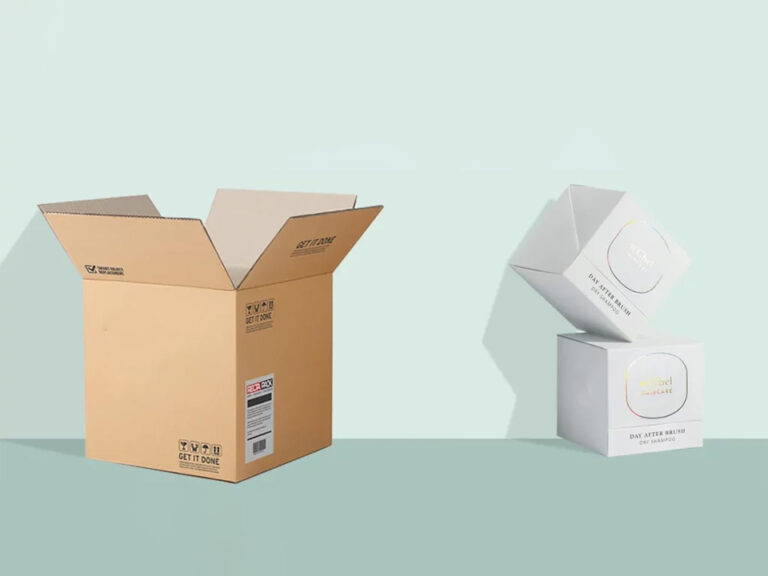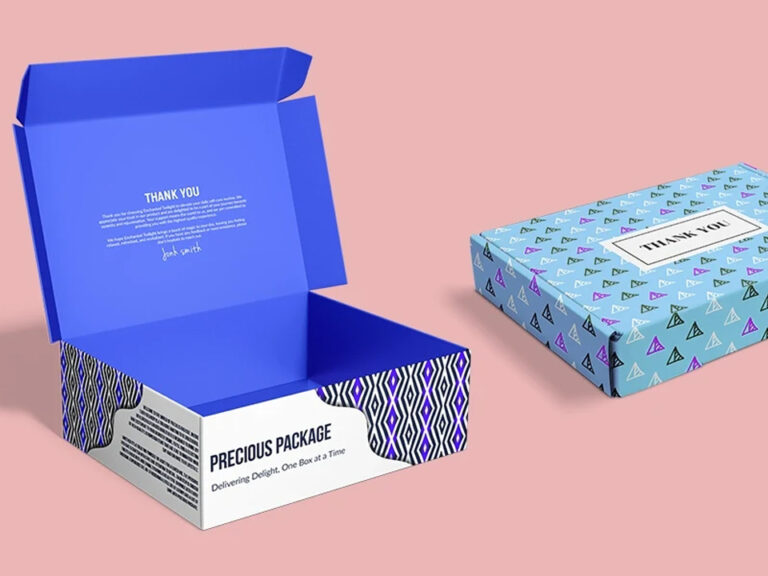





Corrugated boxes are greater than cheap shipping containers: flute profile, board building and construction, compression toughness, moisture direct exposure, and distribution conditions all affect efficiency. This guide breaks down corrugated box types, utilizes, products, benefits, and the useful choices customers frequently mistake.
A box that endures a stockroom pallet, a parcel service provider, a damp filling dock, and a client’s front door is the item of a number of connecting decisions: linerboard grade, tool, flute account, board building and construction, measurements, closure approach, load circulation, and the misuse expected throughout circulation.
That tail end gets overlooked.
I have actually seen product packaging conversations minimize the based on “single wall versus dual wall,” as if that resolves the design question. It doesn’t. A light-weight single-wall container can surpass a terribly defined hefty container when the dimensions, flute positioning, interior fit, and distribution setting are best.
So what are corrugated boxes actually developed to do?
They provide a relatively light-weight structural covering around a product while withstanding compression, leak, resonance, effect, abrasion, and managing stresses. For shopping, retail distribution, commercial delivery, food, electronic devices, cosmetics, and plenty of other applications, that combination describes their endurance.
And the marketplace stays considerable. In July 2024, Reuters reported that Product packaging Corporation of America taped a 9.2% year-over-year boost in corrugated item deliveries each day in Q2 2024, while quarterly earnings reached $2.08 billion. Reuters
That’s not a passing away product packaging style.
It’s a commercial workhorse.
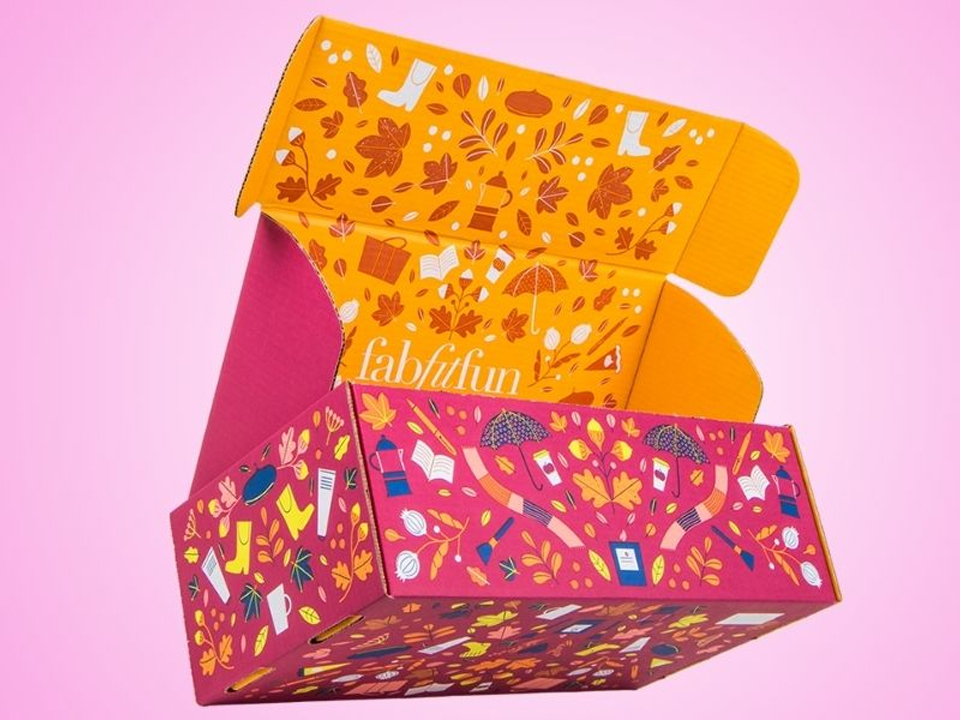
Corrugated boxes are paper-based containers built from one or more flat linerboards bonded to a fluted corrugated tool, producing a lightweight structure with substantially greater rigidness and cushioning than an equivalent sheet of paperboard.
The standard style is simple to picture:
Lining + Fluted Medium + Liner = Corrugated Board
The fluted tool develops upright arches between the linings. Those arcs contribute to stiffness and compression resistance while keeping material usage relatively reduced compared to a strong fiberboard structure of comparable dimensions.
But building modifications everything.
A container meant for a lightweight retail item does not necessarily require the same board requirements as a carton lugging 40 kg of industrial parts with a long-distance circulation network.
And this is where corrugated box products and construction end up being more than vocabulary.
The significant components are:
The flute isn’t ornamental.
It alters performance.
A finer groove can offer far better printability and surface area attributes, while bigger grooves can offer better padding and architectural depth. Typical groove designations include A, B, C, E, and F, with consolidated constructions such as BC or EB using 2 corrugated mediums.
That offers product packaging engineers considerably much more area to optimize than the phrase “cardboard box” suggests.
Not every corrugated box is built from the same number of layers.
That distinction issues due to the fact that the board building affects tightness, piling habits, weight, padding, cost, and resistance to dealing with damages.
| Corrugated Box Kind | Normal Construction | Usual Use | Main Consideration |
|---|---|---|---|
| Single-wall | 2 liners + 1 fluted tool | E-commerce, retail, general shipping | Reduced weight and price |
| Double-wall | 3 linings + 2 fluted mediums | Heavy items, demanding distribution | Greater rigidness and compression resistance |
| Triple-wall | 4 liners + 3 fluted tools | Industrial and really hefty applications | High architectural toughness |
| Micro-flute | Fine groove account | Premium retail packaging, tiny products | Better surface quality and dimensional accuracy |
| Multi-wall combination | 2 different flute profiles | Specialized shipping and retail applications | Efficiency can be tuned to application |
Here’s the tough truth: more board does not automatically indicate much better packaging.
If the product is little, the carton is extra-large, void space is extreme, and the interior enables the item to relocate easily, increasing board toughness may fix the wrong trouble.
The much better concern is not “How thick should package be?”
It is “What failing setting are we making versus?”
The industry utilizes many box designs, but several formats dominate daily applications.
The Normal Slotted Container (RSC) is possibly the most recognizable corrugated box style.
The flaps fulfill around between when folded closed, making the framework straightforward to manufacture, assemble, tape, and automate.
RSC containers are commonly made use of for:
They are not extravagant.
They are efficient.
A full-overlap configuration makes use of flaps that prolong across the whole width of the box.
That extra material can enhance compression resistance and offer better security around sides and seams, making the style beneficial when piling or managing conditions are demanding.
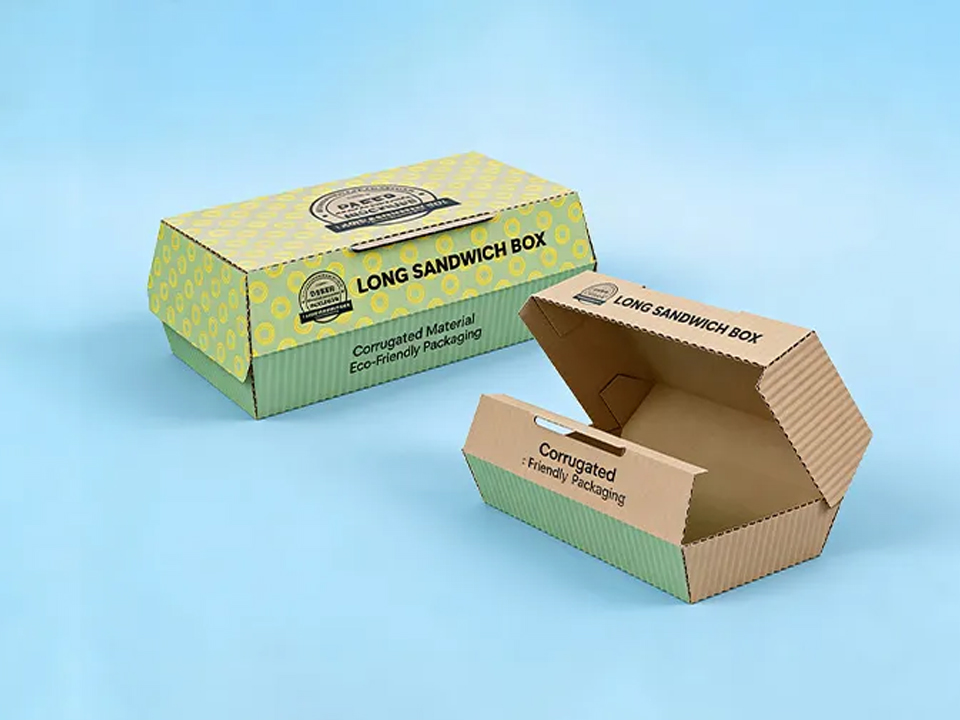
Die-cut boxes are made utilizing tooling that enables a lot more difficult shapes, securing tabs, manages, show features, and product-specific geometry.
This is where corrugated packaging starts to move far from product shipping and towards engineered presentation.
For example, a retail plan might require:
That can be even more reliable than placing an ordinary item inside a generic container and loading the staying space with cushioning.
Corrugated boxes have an abnormally broad application range since their structure can be customized without abandoning the underlying material system.
Common corrugated box makes use of include:
However there is a crucial distinction in between shipping product packaging and presentation packaging.
A delivery container largely has a logistics task.
A premium retail box has an advertising task as well.
That distinction issues when packaging pricey customer items.
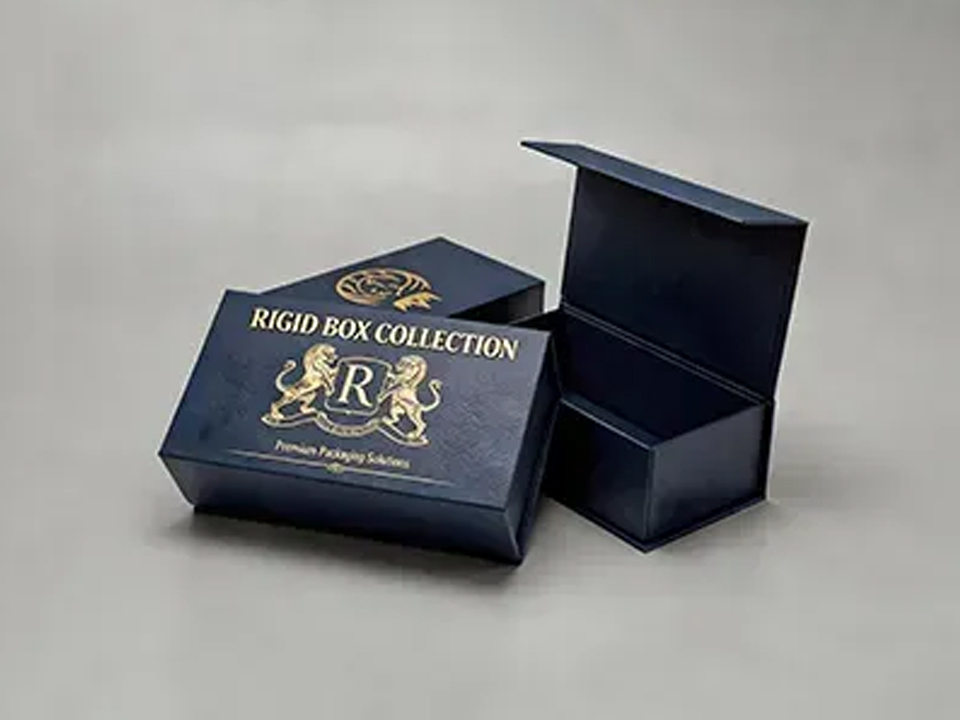
For instance, a rigid discussion box with a custom insert can be better suited for a costs charm device than a standard corrugated carrier. XD Packaging’s magnetic hair wrap gift box with split paperboard insert illustrates just how the interior discussion architecture can become part of the product packaging experience as opposed to simply protecting the components.
Furthermore, a inflexible magnetic hair accessory present box with customized insert addresses a various need: controlled presentation, compartmentalization, and viewed item worth.
That doesn’t make one format widely exceptional.
It suggests the product packaging has a different job.
The advantages of corrugated boxes are simple, yet the best ones are frequently misunderstood.
Corrugated board develops architectural depth with fluting without calling for a solid mass of paperboard.
That provides manufacturers a helpful strength-to-weight partnership.
For shipping, this matters since packaging itself contributes to transportation weight. Reduce unnecessary product packaging mass while maintaining ample protection, and the whole logistics formula can improve.
Corrugated board can be produced, published, die-cut, folded, glued, and transformed at industrial scale.
That production community is a significant factor corrugated packaging continues to be challenging to displace.
It’s not simply a material.
It’s a well-known manufacturing facilities.
Corrugated product packaging can be tailored in dimensions, board building, flute profile, printing, dividings, inserts, closures, and architectural geometry.
That makes it possible to make product packaging around an item instead of requiring a product into whatever container occurs to be readily available.
Paper-based packaging has a well-developed recovery facilities in numerous markets.
The U.S. EPA’s published material-specific data reports a 96.5% reusing price for corrugated boxes in 2018, based on its approach and offered data. The figure is older than the 2023– 2024 market information talked about elsewhere in this guide, so it needs to not be presented as a current global recycling rate. US EPA +1
A lot more recent industry data likewise reveals the continuing function of recouped fiber: AF&PA reported that almost half of recycled paper in 2024 entered into containerboard, the paper product made use of to manufacture corrugated boxes. afandpa.org
However “paper-based” does not instantly mean “ecologically harmless.”
Coatings, adhesives, inks, laminations, contamination, mixed-material elements, and neighborhood recycling facilities can all impact end-of-life end results.
That’s the component advertising and marketing sales brochures often tend to miss.
Every product does.
Corrugated board is prone to extended moisture direct exposure, compression loss, side damages, inappropriate stacking, excessive void room, and poor package-product communication.
Water is specifically unforgiving.
A completely dry corrugated container can provide superb structural efficiency; fill the paper structure, and its mechanical actions can transform substantially.
This is why a box specification can not be separated from the circulation setting.
Temperature level issues.
Humidity issues.
Stacking period matters.
Managing matters.
And the item itself matters.
ISTA’s shopping study supplies a valuable reminder: modern gratification systems reveal plans to mixes of resonance, shock, compression, temperature level, humidity, taking care of, and duplicated touchpoints. Its ISTA 3L protocol was created from store gratification observations, lab testing, industry input, and connections between field damages and testing. ista.org
So when a person says, “It’s simply a box,” I would certainly ask one concern:
Throughout which part of the supply chain?
Direct-to-consumer delivery transforms the product packaging equation.
A palletized delivery taking a trip from a producer to a regulated warehouse does not experience the very same handling series as a single parcel moving with an e-commerce gratification network.
ISTA developed Job 3L specifically to imitate generalised shopping retailer satisfaction, consisting of motion via fulfillment procedures and delivery to the consumer. The company states its study included several e-commerce gratification centers standing for nearly half of U.S. market share and a workgroup of nearly 50 industry participants. ista.org
That’s useful context.
Since the final-mile problem is not academic.
Your box can be gone down.
It can be piled below something larger.
It can experience vibration for hours.
It can encounter temperature level and humidity modifications.
Then it gets to the client.
If the product packaging stops working at that point, the product and the packaging might both come to be waste.
Beginning with the item.
Not the box.
I suggest resolving the choice in this order:
Videotape length, width, elevation, weight, center of gravity, frailty, and any type of parts that can relocate individually.
A product with a delicate protruding component might need a lot more interior engineering than a larger however uniformly designed item.
Ask:
The solutions identify what the box in fact requires to make it through.
Single-wall may be completely appropriate.
Or it might not.
Double-wall and triple-wall frameworks can offer better architectural performance, yet the proper selection depends upon measurements, tons, piling conditions, and the needed security margin.
Huge empty spaces develop their own problems.
The item can relocate.
Impact energy can increase.
Additional filler comes to be necessary.
Shipping quantity can climb.
A a little a lot more costly designed insert can in some cases minimize the complete product packaging system expense.
This is where theory satisfies reality.
ISTA’s testing framework consists of basic simulation treatments meant to replicate damage-producing motions, pressures, conditions, and series experienced throughout transportation. ista.org
The finished plan matters greater than the board spec created on an investing in paper.
This is one of the less-discussed concerns in product packaging.
Corrugated product packaging is exceptional at many jobs, but it does not immediately provide the premium responsive experience connected with rigid packaging.
If the item is high-value, gift-oriented, luxury-positioned, or created for repetitive discussion, the product packaging may need substantially greater than transportation security.
Consider a holographic cabinet teeth-whitening present box with insert or a black rigid lash tweezer presentation box with foam insert.
Those formats fix a discussion and company problem.
A corrugated shipping container can then execute the secondary logistics duty.
This two-layer approach typically makes even more sense than requiring one bundle to do every function.
The difference becomes specifically crucial for brands selling superior customer products.
| Variable | Corrugated Box | Rigid Box |
|---|---|---|
| Key stamina | Delivering and distribution | Discussion and costs defense |
| Weight | Usually reduced | Normally higher |
| Folding/storage performance | Strong | More limited |
| Custom-made structural layouts | Substantial | Extensive |
| Costs responsive assumption | Modest to high relying on coating | Commonly high |
| E-commerce shipping | Exceptional for numerous applications | Frequently needs extra shipping security |
| Item inserts | Easy to incorporate | Highly adjustable |
| Retail presentation | Application-dependent | Strong |
| Regular duty | Transport/package defense | Presentation/package experience |
The most intelligent packaging system might make use of both.
A rigid perfume drawer box with black foam insert and sleeve, for instance, can serve as the consumer-facing plan while a separate corrugated shipping container safeguards that presentation plan throughout circulation.
That’s not repetitive packaging if each layer does a different feature.
It’s systems engineering.
Price is hardly ever identified by board thickness alone.
Dimensions, material quality, flute profile, printing, order amount, tooling, transforming approach, inserts, layers, products, and manufacturing tolerances can all influence the final cost.
And there is an additional variable purchasers consistently ignore:
dimensional effectiveness.
A bigger container can eat extra board, inhabit even more warehouse space, require even more void fill, and rise transportation volume.
So the cheapest box on the getting quote might not be the cheapest package in the supply chain.
In 2024, Packaging Company of America reported solid corrugated demand alongside greater pricing; Reuters reported Q2 revenue of $2.08 billion and a 9.2% rise in corrugated item deliveries per day year over year. Reuters
That does not inform you what your box must set you back.
It does tell you something useful concerning the market: corrugated product packaging stays deeply connected to commercial manufacturing, consumer distribution, and logistics need.
An insert can transform the performance of an otherwise regular container.
The standard purpose is easy: control movement.
Foam, paperboard, formed pulp, corrugated partitions, die-cut board, and various other frameworks can separate components and reduce product-to-product call.
For exceptional product packaging, the insert additionally becomes part of discussion.
A rigid hinged supplement present box with custom printed insert shows the concept plainly: the bundle isn’t merely a container; the interior structure organizes the product and regulates how the consumer experiences it.
The exact same principle puts on delivery.
Different material.
Very same reasoning.
Control movement, take care of forces, and keep the item where the package developer intended it to be.
Box compression strength is often treated as a static number.
Genuine distribution is not fixed.
Boxes are piled.
They lean.
They experience humidity.
They age.
They are subjected to pallet overhang.
They are packed unevenly.
A box can as a result have ample research laboratory efficiency and still fail under a badly created real-world circulation configuration.
Research study highlighted by ISTA from Virginia Tech’s Facility for Packaging and System Tons Layout examined box compression stamina loss associated with pallet overhang. The research incorporated 2,723 compression tests with an independent recognition set of 600 tests throughout 30 industrial box styles. International Safe Transit Association
That’s the sort of evidence I intend to see before making certain insurance claims concerning “more powerful boxes.”
Due to the fact that stamina belongs to the system.
Not simply the material.
Prior to accepting a corrugated box requirements, I would desire answers to these concerns:
If no one can answer those inquiries, the product packaging requirements is possibly incomplete.
For instance, a retail plan may need:
That can be far more effective than placing a normal item inside a common carton and filling the continuing to be area with cushioning.
Corrugated boxes succeeded due to the fact that they resolve a hard commercial trouble elegantly: they supply valuable structural performance without requiring a large quantity of product.
Yet the phrase “corrugated box” conceals huge variant.
Single-wall and double-wall boards act in different ways. A-flute and E-flute address various issues. An RSC and a die-cut presentation carton have different purposes. A pallet delivery and a front door delivery develop various dangers.
Which’s why the very best packaging decision is seldom package with the thickest board.
It’s package engineered around the item, the circulation setting, the needed presentation, and the expense of failure.
Corrugated boxes are paper-based containers made from level linerboards adhered to a fluted paper medium, producing a light-weight structural board used for delivery, storage space, retail product packaging, and item protection. Their stamina comes from the geometry of the fluted medium incorporated with the tightness of the surrounding linerboards.
The major kinds of corrugated boxes include single-wall, double-wall, triple-wall, micro-flute, regular slotted, full-overlap, and die-cut setups. These layouts vary in board building and construction, flute account, architectural efficiency, production approach, and desired application, permitting packaging developers to match the container to item weight and circulation problems.
The benefits of corrugated boxes include relatively low weight, architectural strength, scalable production, customization, stackability, printability, and developed reusing facilities. Corrugated board can likewise integrate partitions and inserts, allowing makers to make packaging around certain products instead of counting exclusively on common delivery containers.
Choosing the appropriate corrugated box requires matching board building and construction, dimensions, flute profile, and inner protection to the product’s weight, delicacy, stacking conditions, humidity exposure, taking care of environment, and distribution route. The finished bundle should be reviewed as a system as opposed to selected entirely according to board thickness or price.
Corrugated boxes are extensively reused with established paper recovery systems, although real recyclability relies on local collection framework and the problem and structure of the product packaging. UNITED STATE EPA information reported a 96.5% recycling rate for corrugated boxes in 2018, while much more recent AF&PA details reveals recuperated paper continuing to feed containerboard production. US EPA +1
Single-wall corrugated board has one fluted tool in between two linings, while double-wall board consists of two fluted mediums separated by an added liner. Double-wall building can give better rigidity and compression resistance, yet the proper choice depends on item weight, carton dimensions, stacking, managing, and circulation conditions rather than density alone.
Corrugated boxes are commonly utilized for e-commerce because they can give light-weight architectural security while fitting several product sizes and distribution configurations. Nonetheless, direct-to-consumer shipping presents duplicated handling, vibration, shock, compression, and environmental direct exposure, making bundle screening and product-specific design specifically vital.
Do not start with package.
Start with the product, the supply chain, and the failure you can not pay for.
If the purpose is exceptional discussion instead of transportation alone, check out packaging configurations such as a black rigid VIP card box with divider panel insert and place UV or a yellow magnetic organizer presentation box with foam insert.
For brands stabilizing discussion with shipping security, the practical solution might be a collaborated packaging system: engineered corrugated defense outside, product-specific presentation inside.
That is where packaging quits being an asset purchase and starts ending up being an engineered component of the item.