



E flute is a useful starting point for compact branded mailers. B flute deserves consideration when greater board depth and rigidity matter. Here is how to compare them without confusing thickness with proven protection.
Thickness fools buyers.
When I compare corrugated flute types for a mailer, I want the supplier to explain the combined board, product restraint, closure, and shipping conditions before anyone treats a flute letter as proof of protection.
What does an extra millimeter buy you if the product still hits the corner?
My starting point is straightforward: sample E flute for compact, presentation-focused mailers; compare B flute when the package needs greater depth and rigidity. Consider F flute for small retail packs, with shipping performance established through testing.
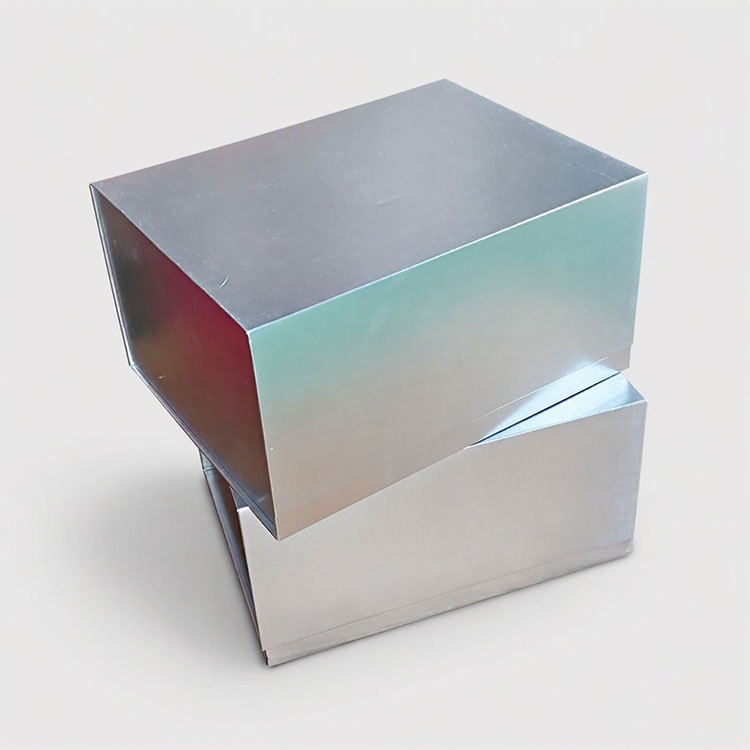
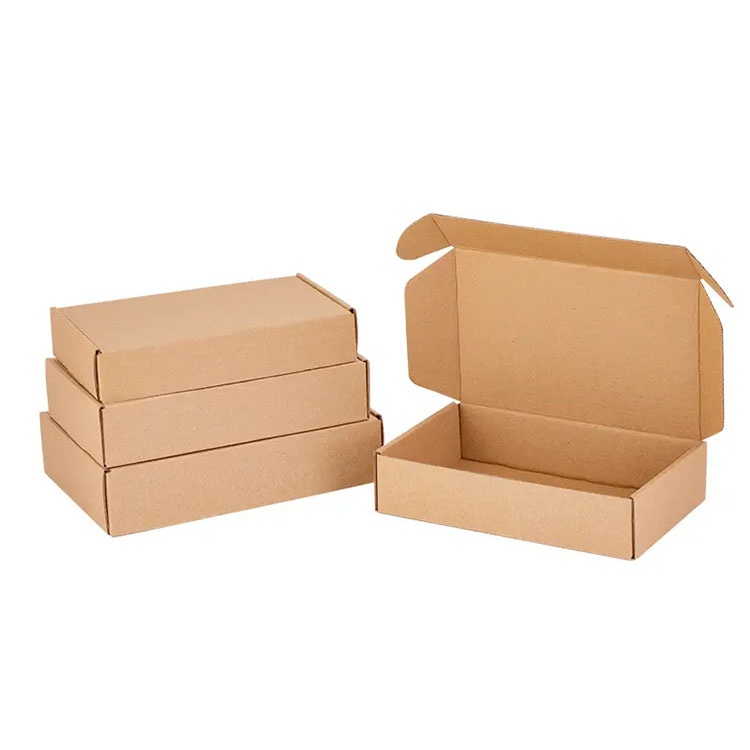
The decision becomes useful when you specify the complete corrugated shipping mailer box: board, dimensions, inserts, closure, and intended delivery route.
A flute is the wave-shaped paper medium inside corrugated board. Single-wall board has one fluted medium between two liners; double-wall board has two fluted mediums and three liners.
Il Fibre Box Association’s explanation of corrugated construction describes the general tradeoff: larger profiles provide cushioning and structural depth, while smaller profiles support finer graphics. Actual performance varies with the paper combination and package design.
Corrugated cardboard flute sizes are often presented as if each letter specifies an exact sheet thickness. That creates avoidable purchasing errors.
The representative heights below come from Stafford’s corrugated substrate guide. They exclude liner thickness. They are comparison figures, not universal manufacturing tolerances.
| Flute | Example flute height, excluding liners | Where I would consider it |
|---|---|---|
| A | 4.65 mm | Cushioning-focused shipping applications where bulk is acceptable |
| C | 3.60 mm | Larger shipping cartons and outer packaging |
| B | 2.45 mm | Mailers requiring greater board depth and rigidity |
| E | 1.15 mm | Compact branded mailers with detailed graphics |
| F | 0,75 mm | Small retail packs with a fine printing surface |
Finished board will be thicker. For the paper combinations illustrated in the same guide, single-wall E flute measures 1.55–2.05 mm, while B flute measures 2.85–3.35 mm. Those are examples, not the full possible range.
Ask the supplier to state finished combined-board caliper and tolerance. A quotation that simply says “E flute, approximately 1.5 mm” leaves too much unresolved.
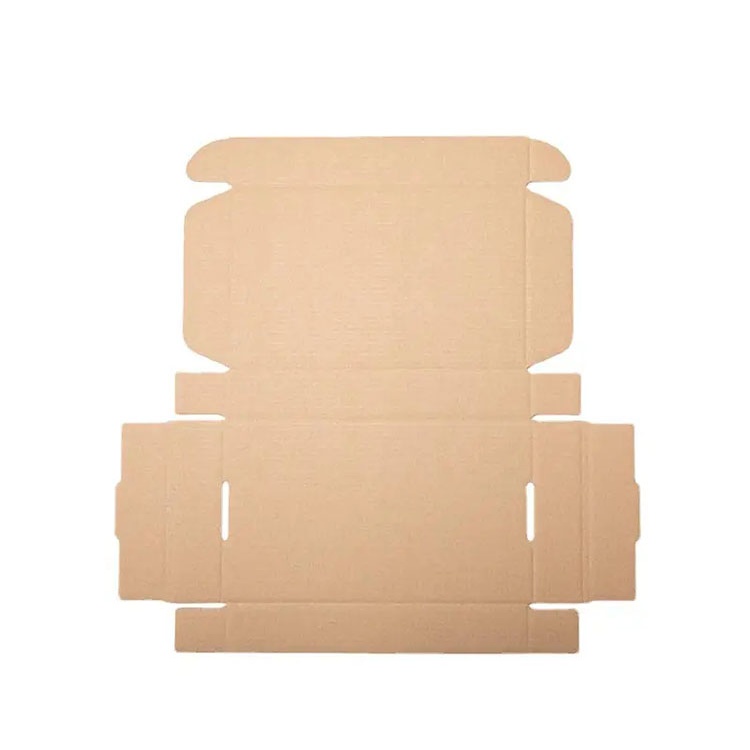
E flute belongs on the shortlist for small accessories, cosmetics, and subscription assortments where the contents can be restrained effectively.
Its finer profile supports a relatively smooth printing surface and compact construction. But flute selection is only part of the print specification: liner quality, ink coverage, printing method, and converting pressure also deserve attention.
Per custom printed corrugated boxes, I would review fine text, barcodes, large solid colors, and fold areas on a physical production-representative sample.
A beautiful flat sheet can still produce an awkward assembled box.
B flute provides more separation between the liners than E flute. That additional depth can help bending stiffness, although the paper grades and converted structure determine the result.
I would put B flute into a comparison trial when a mailer has broad unsupported panels, concentrated product loads, or insufficient protection in its current E flute construction.
Then inspect what failed. Was it panel deflection? A crushed corner? A released locking tab? Product movement?
Each points toward a different engineering response. A thicker board will not resolve every one.
F flute offers a fine profile for compact printed packaging. Its suitability for direct parcel delivery needs separate evaluation.
The first question I would ask is whether the box travels inside an outer carton or carries the shipping label itself. Once it becomes the outer package, its closure, edges, and product protection face the delivery network directly.
That changes the approval brief.
I would require five items before comparing production quotes.
ECT, the edge crush test, measures edgewise compression resistance of a board specimen. BCT, the box compression test, measures compression performance of the assembled box.
Neither establishes a universal safe payload from the flute letter alone.
I would also keep burst resistance, stacking performance, and impact protection separate in the purchasing discussion. They describe different demands on the package, and a single “heavy duty” claim explains very little.
A 2024 study by Cal Poly researchers Jay Singh and Koushik Saha esaminato 120 samples across five container designs. Reinforcement tape reduced panel displacement under ambient conditions, but its effectiveness diminished at higher humidity; compression-strength results did not show a clear pattern from tape presence under ambient conditions.
Il Cal Poly study on corrugated container bulging and compression concerned regular slotted containers. I take it as evidence that structure and conditioning deserve explicit testing when developing a mailer.
So test the conditions the package will encounter. Record product damage, closure failure, permanent deformation, and unacceptable cosmetic scuffing.
Set the acceptance criteria before reviewing the results.
A lower unit price is only one part of the purchasing decision. Compare the mailer, inserts, packing labor, freight, and expected damage costs together.
Here is an illustrative calculation, not a market quotation: saving $0.08 per mailer saves $80 across 1,000 shipments. If each additional damage incident costs $40, two extra incidents erase that saving.
That is an increase of just 0.2 percentage points in the damage rate.
For USPS Ground Advantage Commercial, the July 12, 2026 update changed the dimensional-weight divisor to 139 and required dimensions used for DIM calculations to be rounded up to whole inches.
Under the current USPS dimensional-weight rules, rectangular parcels exceeding 1,728 cubic inches are rated using actual or dimensional weight, whichever is greater.
For example, a package measuring exactly 14 × 12 × 11 inches externally occupies 1,848 cubic inches:
1,848 ÷ 139 = 13.29 lb, rounded up to 14 lb dimensional weight.
A thinner board creates postage savings only when the resulting dimensions or weight affect the applicable charge. Measure the assembled, packed sample before calculating savings.
In its 2025 Sustainability Report, Amazon reports avoiding 5.4 million metric tons of packaging materials in North America and Europe since 2015 through lighter, right-sized packaging. This is a company-reported result across its packaging operations.
My takeaway: evaluate material, package size, and product protection together. A flute substitution is one design variable within that work.
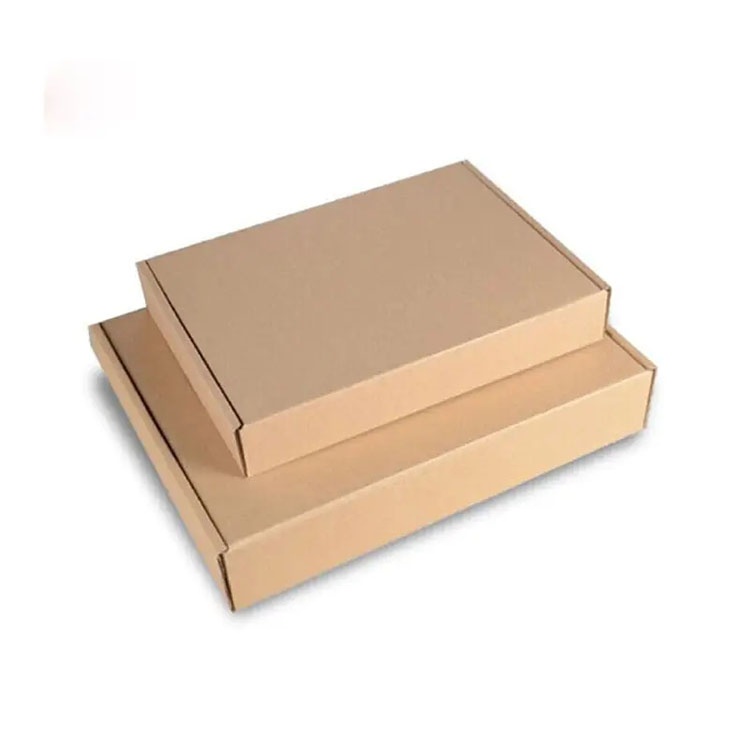
Corrugated flute types are the letter-designated profiles of the wavy paper medium inside corrugated board, with A, B, C, E, and F differing in height and spacing, which influence structural depth, cushioning, printing behavior, and the construction options available when designing a protective mailer.
The best flute for mailer boxes is the profile that meets the packed product’s protection, printing, assembly, and shipping requirements at the lowest verified total cost, with E flute a useful starting point for compact branded mailers and B flute worth testing when greater board depth is needed.
The difference between B flute and E flute is their corrugation geometry: B generally uses a taller, more widely spaced profile, while E uses a finer profile that supports compact construction and detailed graphics, with actual strength determined by the paper combination, converted structure, and environmental conditioning.
F flute packaging is fine-profile corrugated packaging that can serve as a shipping mailer when its complete construction, product restraint, closure, and tested performance suit the intended distribution route, although small retail packs made from F flute may require an outer carton depending on their contents and handling exposure.
Send your product dimensions, packed weight, fragility details, artwork, order quantity, and shipping destination to request a custom corrugated mailer quote.
Ask for an E flute proposal and a B flute comparison where appropriate, with the board specifications, finished dimensions, insert design, and sample costs stated clearly. Approve the construction after testing it with your actual product.