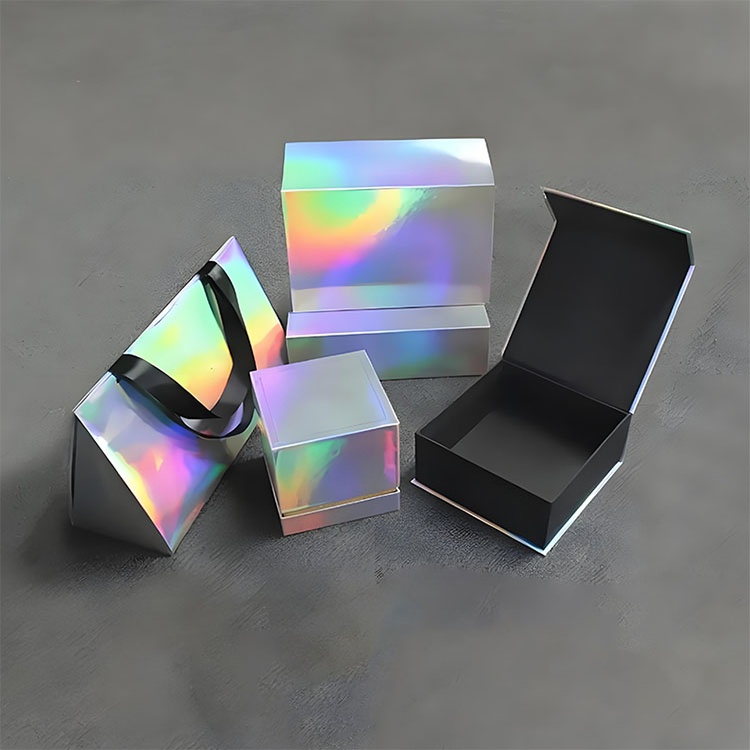




Uncoated paper gives packaging a tactile finish, but its absorption behavior can change the artwork. We examine three printing studies and turn their findings into practical decisions about color, typography, ink, and proofs.
The sheet decides. When we approve box artwork on a bright monitor, then move the same file onto uncoated paper without testing the actual stock, we leave color strength, fine detail, and shadow separation exposed to a material change the screen cannot predict. Why approve a color the production sheet has never shown?
Uncoated paper ink absorption affects box artwork by changing how liquid ink components enter the sheet and how printed detail develops. Colors can lose strength. Fine edges can become irregular. Tonal relationships can shift.
My position is simple: the paper belongs in the artwork brief from the beginning.
Uncoated paper lacks the pigment coating used to create a more uniform printing surface. It can still contain sizing agents and fillers, and it can be calendered to improve smoothness. Those differences matter when choosing uncoated paper for custom packaging.
A material description that says only “natural white, uncoated” leaves important questions unanswered. Which grade? Which printing side? What surface treatment?
For a wrapped rigid box, specify the outer paper separately from the structural board. The ink meets the wrap; the greyboard provides structure.
We also need to separate absorption from drying. In conventional sheet-fed offset printing, lower-viscosity ink components penetrate the substrate during setting, while subsequent chemical changes contribute to drying, as Holmen’s paperboard technical guide explains. A surface that feels dry still needs adequate resistance to rubbing and finishing operations.
That is why “it absorbs ink quickly” tells me very little about whether a finished box will perform well.
A 2015 BioResources study hosted by NC State University tested 80 g/m² laboratory sheets using an Epson 7910 inkjet printer. The researchers varied alkyl ketene dimer sizing, precipitated calcium carbonate—CaCO₃—filler, and calendering.
Their image-derived average ink permeability measured 34.43% for one sized sheet and 44.07% for one filler-containing sheet. Calendering reduced penetration in another comparison. These percentages describe the study’s image-analysis metric; they are not purchasing specifications for packaging board.
My takeaway: a shared “uncoated” label does not establish equivalent print behavior. Changing the paper supplier or grade deserves another print check.
In un study published on August 25, 2021, researchers from University North and the University of Zagreb compared coated paper, uncoated paper, and oriented polypropylene film using cyan UV flexographic ink.
Uncoated paper produced less homogeneous fine elements because penetration into its pores was more irregular. Yet the largest changes in fine-element dimensions occurred on the polypropylene film.
That distinction matters. I would inspect edge quality and dimensional change separately: a small letter can remain approximately the expected size while its boundaries become visibly ragged.
A PLOS One study published on October 30, 2025 examined newsprint, offset paper, and coated paper at 133 and 175 lines per inch. Dot gain was most pronounced around 40–60% nominal tone values.
The researchers’ compensation approach improved midtone and dark-tone reproduction, while 0–20% highlight tones still showed limitations. The authors also noted that applicability to specialty papers remained unverified.
For box artwork, I read this as support for measured calibration. It gives us no reason to lighten every image by an arbitrary percentage.
I review vulnerable artwork elements before discussing how “premium” the paper feels. A tactile surface cannot rescue unreadable copy.
| Artwork element | Problem to inspect | What I would request |
|---|---|---|
| Large solid backgrounds | Uneven density, mottling, or weak color | A solid patch printed on the proposed stock |
| Product photography | Muddy midtones or lost shadow separation | A test containing the actual image |
| Small positive text | Rough edges and inconsistent stroke weight | Actual-size type samples in the intended ink |
| Reversed lettering | Narrow gaps filling or counters becoming unclear | A printed knockout test at final size |
| Fine rules and illustrations | Broken, irregular, or thickened details | A range of line widths for approval |
| Brand colors | Differences in hue, saturation, or apparent brightness | A drawdown or press sample with an agreed reference |
| Barcodes and QR codes | Poor contrast or damaged small features | Verification on the finished packaging |
Paper shade adds another variable to color reproduction on uncoated paper. Brown stock influences the appearance of overprinted colors, so artwork developed for white paper needs a separate assessment. The considerations in CMYK printing on kraft paper are particularly relevant when moving a design between white and brown substrates.
And adding more ink should not be the automatic response to a weak-looking solid. I would first investigate the stock, ink formulation, transfer conditions, and drying behavior.
Ask the printer to confirm:
For small black text, ask whether C0 M0 Y0 K100 is appropriate. Four-color black introduces additional registration and coverage demands that small lettering may not need.
Queste decisioni vanno inserite nel packaging artwork design brief, alongside the dieline, copy, color references, and finishing layers.
A useful test sheet should contain your actual logo, difficult photograph, smallest copy, and largest solid area.
I would also include positive and reversed type at 6, 8, and 10 pt, rules at 0.15, 0.20, and 0.30 mm, and tonal ramps. These are proposed test features, not automatic production limits.
Why test generic artwork when your own design contains the features you need to approve?
For offset work, establish the file and proof requirements before release; the same questions run through offset printing standards for rigid box artwork.
A digital prototype may be useful for checking layout and scale while using a different ink system from bulk production. Ask which decisions the sample can support.
Through campioni di imballaggio e prototipazione, request a printed material test and a finished sample appropriate to the production method. Review color after the agreed drying interval, then inspect rubbing, folding, and wrapping where relevant.
For brand colors, record the physical reference, viewing conditions, measurement setup, and agreed ΔE00 tolerance. A tolerance without a defined reference invites an argument later.
My strongest objection is to approving a sample whose limitations nobody has written down.
Uncoated paper is paper without a pigment coating on its printing surface, although it can contain sizing agents, fillers, and other treatments that influence how ink spreads, penetrates, and dries, making its specific grade and finish important when designing printed box wraps or folding cartons.
Ink absorption affects box artwork by changing where liquid ink components settle within the sheet, which can reduce color strength, alter tonal contrast, roughen fine edges, and create uneven solids when the paper, ink system, and printing conditions are poorly matched.
The best inks for uncoated paper are formulations matched to the chosen stock and printing process, with appropriate setting or curing behavior, pigment strength, and rub resistance, so an offset ink, flexographic ink, and production inkjet ink must be evaluated within their respective systems.
Ask for the proposed ink series and a print test on the intended paper.
Dot gain control on uncoated paper is the calibration of tone reproduction for a specific paper, press, ink, and screening combination, using measured test patches and compensation curves to move printed tones toward an agreed target while preserving usable detail in highlights and shadows.
Send your dieline, artwork, brand color references, proposed paper, and order quantity to XD Packaging for an uncoated paper artwork review.
Request a printed test on the proposed stock, confirmation of the production method and ink limits, and a finished approval sample. Record the accepted color, fine-detail, and rub-resistance criteria before authorizing bulk production.