



A tight lid does not prove premium quality. Here is how to specify clearance per side, expose tolerance problems, and approve a two-piece box using finished samples.
Clearance is conditional.
When a supplier quotes one gap without defining whether it applies per side or across the full width, which finished surfaces are measured, and how the box behaves after conditioning, the number tells us very little.
What exactly are you approving?
A lift-off lid box needs a finished clearance that accommodates manufacturing variation while delivering the intended opening feel. There is no universal millimeter allowance. For the small paper-wrapped rigid box example below, I would request prototypes at 0.5, 0.75, and 1.0 mm per side for comparison. These are proposed trial dimensions, not an industry standard or a production specification.
Start with the surfaces that actually touch.
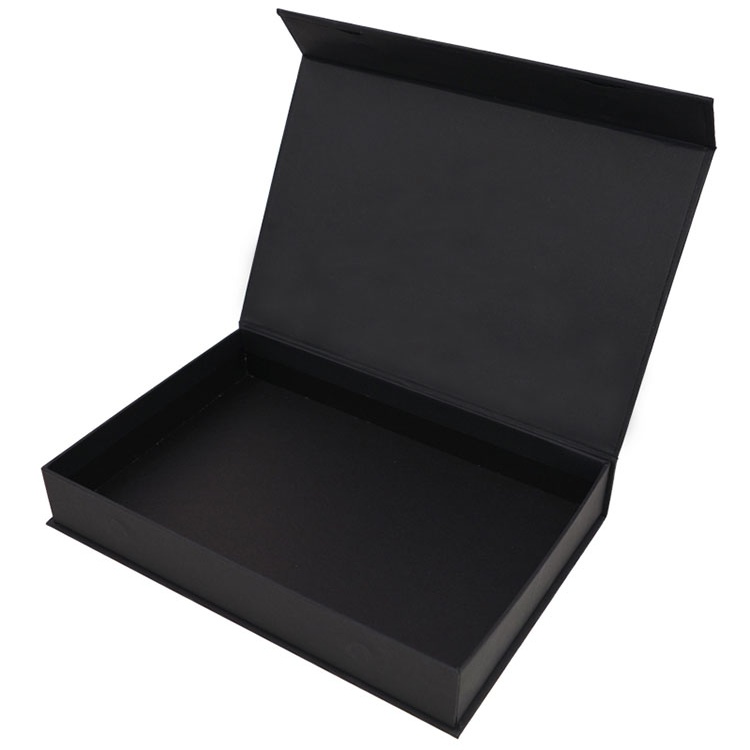
On a conventional telescoping 뚜껑이 열리는 상자, the lid’s finished inner walls slide over the base’s finished outer walls. On a shoulder-and-neck construction, the neck may locate the lid instead. Measuring the wrong surfaces makes every subsequent calculation irrelevant.
For straight, parallel walls:
Nominal clearance per side = (finished lid internal dimension − finished base external dimension) ÷ 2
Calculate length and width separately. Dividing by two gives the nominal gap on each side when the parts are centered; it does not establish the smallest local gap around bowed walls or bulky corners.
Consider a hypothetical base measuring 150.0 × 100.0 mm externally after wrapping:
| Prototype | Finished lid internal length × width | Total difference in each axis | Nominal clearance per side |
|---|---|---|---|
| A | 151.0 × 101.0 mm | 1.0 mm | 0.50 mm |
| B | 151.5 × 101.5 mm | 1.5 mm | 0.75 mm |
| C | 152.0 × 102.0 mm | 2.0 mm | 1.00 mm |
Keep lid depth, board, wrap, adhesive, and finish consistent across this comparison. Then assess which sample seats and opens correctly.
I would not label A “luxury” and C “cheap” from these dimensions. That judgment requires handling the finished boxes.

A ruler across the lid opening is a screening check. It is not a complete fit inspection.
I would put the following checks into the packaging structural design and engineering brief:
Keep product headspace separate from wall clearance. A bottle cap pressing against the lid can stop closure even when the lid-to-base dimensions are correct.
Here is a hypothetical one-axis specification:
At the tightest dimensional combination, the lid is 151.20 mm inside and the base is 150.30 mm outside:
(151.20 − 150.30) ÷ 2 = 0.45 mm per side.
At the opposite extremes, the calculated clearance becomes 1.05 mm per side. That range excludes local distortion and corner buildup. The ±0.30 mm values are illustrative assumptions, not a claim about any factory’s capability.
This is why “0.75 mm clearance” is an incomplete purchase specification. We also need the permitted variation of the two finished parts.
A move to textured paper packaging deserves a new review of the finished mating surfaces. Paper weight alone does not specify the thickness of the completed wrap, adhesive, lining, and finish.
For example, if a revised finish reduces the lid’s internal width by 0.20 mm and increases the base’s external width by 0.20 mm, the total dimensional difference falls by 0.40 mm. The calculated per-side clearance falls by 0.20 mm.
Small additions matter when the starting gap is small.
I distrust clearance advice that borrows a laboratory number and quietly turns it into a universal packaging rule. The useful evidence identifies variables we should control.
In Clemson University’s December 2019 study of humidity and box compression, Gary Ashton Brown tested 3,000 industry-supplied corrugated boxes across seven relative humidity conditions spanning 30% to 90% RH. Moisture content increased with relative humidity, while compression strength decreased.
These were corrugated compression tests. They establish moisture sensitivity in the tested packaging, not a lift-off lid clearance. My practical inference is to record environmental conditions when approving fit and investigate the conditions expected during distribution.

A 2016 study published in NC State University’s BioResources journal examined press-formed paperboard trays and found that all produced trays exceeded the mold’s design dimensions in both length and width; heat sealing subsequently reduced tray size and narrowed dimensional differences.
That process differs from assembling wrapped greyboard boxes. Its relevant lesson is that manufacturing operations can change finished geometry, so I would verify finished parts instead of approving fit from cutting dimensions alone.
In a 2021 BioResources study by Niini and colleagues, researchers tested paperboard trays with a 265 × 162 × 38 mm reference geometry during heating and cooling. Width changed more than length, which ran parallel to the material’s machine direction, and the trays exhibited flange and wall distortion.
Those food-processing conditions are not a gift-box qualification test. The useful inference is narrower: measure both axes and inspect shape, rather than assuming the whole package moves uniformly.
“Premium suction” is a marketing description until somebody defines how the lid should open.
I would investigate overlap depth, friction, local interference, and air exchange before deciding that a resistant lid needs an even tighter gap. A slow reveal and a box that jams are different outcomes.
Use packaging samples and prototypes to compare the proposed clearances with the intended wrap, finish, insert, and product. An early structural mock-up helps resolve geometry; final fit approval needs representative finished materials.
Write down the acceptance criteria:
A hand-adjusted pair proves that one pair fits. It does not prove that randomly packed lids and bases will fit each other.
My hard line: approve the finished dimension limits and the handling result together.

A lift-off lid needs a positive finished gap that accommodates material buildup, dimensional variation, and the required opening feel, with the approved value established through prototypes measured per side between the lid’s inner walls and the base’s outer walls, or the locating neck.
The 0.5–1.0 mm prototype bracket above belongs to the illustrative comparison; it is not a universal allowance.
Box lid clearance is measured by subtracting the finished base’s external length or width from the corresponding finished lid’s internal dimension and dividing by two for a centered, nominal per-side gap, while checking multiple positions because bowing, taper, and corner buildup can reduce local clearance.
Clearance is the intended space between mating lid and base surfaces, while box lid fit tolerance is the permitted variation in their specified dimensions, so a workable drawing must state both the nominal finished gap and the dimensional limits that can make individual boxes tighter or looser.
A two-piece box needs a clearance specification matched to its locating surfaces, overlap depth, materials, finishes, manufacturing capability, and expected environment, which means a dimension approved for one removable lid box cannot automatically be transferred to a different size, wrap, or shoulder-and-neck construction.
Send XD Packaging your product dimensions and weight, preferred wrap and finish, target quantity, shipping destination, and intended opening feel, then request a lift-off lid box prototype review.
Ask for comparative clearance samples, a finished-dimension sheet with tolerances, and written opening acceptance criteria before approving bulk production.
Approve the measured fit. Then approve the order.