



An edge crush test measures corrugated board strength. A box compression test evaluates the assembled mailer. Here’s what buyers should specify—and what neither result can guarantee.
Numbers sell boxes. When I read a mailer specification, I want to know whether the quoted strength belongs to a small piece of corrugated board or the assembled package, because those measurements answer different questions and justify different purchasing decisions. Which number actually supports approving the finished mailer?
For finished-mailer compression resistance, prioritize BCT. Use the edge crush test to specify and control the board, then test the packed product against the distribution hazards it will face.
That distinction matters when sourcing custom shipping mailer boxes. A board rating helps define what you buy. It cannot, by itself, establish how a particular box will protect a particular product.
The edge crush test vs box compression test comparison starts with the specimen: one tests corrugated board; the other tests a constructed container.
| Comparison | Edge crush test: ECT | Box compression test: BCT |
|---|---|---|
| Test specimen | A short specimen of corrugated board | An assembled box |
| 測定 | Edgewise compressive force per unit length | Compressive force resisted by the tested container |
| Common units | lbf/in or kN/m | lbf, N, or kN |
| Common methods | TAPPI T 811 or T 839 | TAPPI T 804, ASTM D642, or ISO 12048, as specified |
| Main purchasing use | Define and compare board strength | Evaluate the finished structure’s compression resistance |
| Variables requiring attention | Specimen preparation, method, moisture, board construction | Dimensions, assembly, closure, contents, orientation, conditioning |
TAPPI’s standards directory identifies separate methods for board edge compression and container compression. ASTM D642-25 also allows containers to be tested with or without contents—an important detail when the product or insert shares the load.
I would challenge any comparison that omits the units or test configuration. “Compression strength: 500” is an incomplete specification.
Five hundred newtons? Five hundred pounds-force? An empty mailer, or a filled package with a rigid insert supporting the lid?
Those are different results.
A 32 ECT rating means an edgewise compression strength of 32 pounds-force per inch, これはおよそ 5.60 kN/m. It does not assign the finished mailer a universal product-weight capacity.
The missing information is the box.
An assembled mailer introduces folds, scores, locking tabs, overlapping panels, and a particular loading direction. Those features determine how force travels through the structure.
That is why I would involve 包装の構造設計およびエンジニアリング before treating a board upgrade as the answer to every compression problem. The investigation should examine the failure location: a buckled wall, disengaged lid, damaged score, or collapsing corner.
Each points toward a different design decision.
The simplified McKee equation is commonly expressed as:
Estimated BCT = 5.87 × ECT × √(t × P)
Here, ECT is in lbf/in, board thickness t and box perimeter P are in inches, and the resulting BCT is in pounds-force.
The equation connects board strength, thickness, and perimeter. Its assumptions still need to fit the structure. Georgia Tech’s technical discussion explains that panel buckling, box proportions, and loading direction affect the applicability of the model. A shallow mailer deserves particular scrutiny before a generic calculator result becomes its acceptance specification.
My purchasing rule: label calculations as estimates and ask for measured results on the proposed mailer.
The useful evidence is more specific than “stronger cardboard protects products.” It shows how conditioning, prediction methods, and test sequences change what a strength number means.
Gary Ashton Brown’s December 2019 Clemson University study 評価された 3,000 industry-supplied boxes ~を横切って seven relative-humidity conditions from 30% to 90%. Compression testing followed TAPPI T804 and took place inside an environmental chamber.
Within the tested range, compression strength decreased as moisture content increased; the relationship with relative humidity followed a second-order polynomial decline.
The purchasing implication is straightforward: compare results obtained under comparable conditioning. If your route includes humid storage, request evidence relevant to that exposure.
A dry laboratory result answers a dry laboratory question.
Roman Popil’s Georgia Tech investigation of copy-paper boxes 検討した 42 used boxes from different manufacturers or designs.
The report describes 52% average prediction error with the original McKee form, compared with 25% after fitting a model to the experimental data. These were copy-paper boxes; the percentages should not become correction factors for mailers.
For me, the lesson is about evidence quality. A calculated value should earn credibility through comparison with physical tests on the relevant structure.
A 2026 peer-reviewed study published in BioResources 評価された 25 corrugated packaging variants using compression and random vertical vibration tests under ISO 12048:1994 and ISO 13355:2016.
The researchers reported an average 10.9% increase in measured load-bearing capacity after vibration. Counterintuitive? Yes. They also explicitly limited the findings to the controlled conditions and empty-box compression behavior, explaining that increased BCT need not translate into improved product protection.
I would ask the same question about any impressive test report: what outcome did the experiment actually measure?
A higher compression peak and an undamaged product are separate acceptance criteria.
I would turn corrugated box strength testing into a written purchasing requirement before approving the production order.
Start with サンプル包装および試作, and identify which samples represent the intended production materials and construction. A visual mock-up can answer questions about appearance while leaving performance questions unresolved.
Record the internal dimensions, board construction, flute profile, ECT requirement, dieline revision, closure method, and insert specification.
~について custom printed corrugated boxes, include the intended print and finishing processes in the sample brief. The performance approval should correspond to the construction you intend to order.
Then require a test plan covering five points:
For qualifying individual parcel shipments, ISTA手順3A 重量が 150 lb / 70 kg or less and includes standard, small, flat, and elongated package categories. Select the applicable procedure and configuration with the testing laboratory.
BCT also needs to be distinguished from sustained stacking performance. ASTM D642 addresses compression testing and directs users to ASTM D4577 for constant-load testing; the peak force reached in a compression test should therefore not be treated as an allowable long-term warehouse load.
And set the acceptance criteria before testing. Otherwise, the discussion can drift toward explaining a result instead of deciding whether it meets the purchasing requirement.
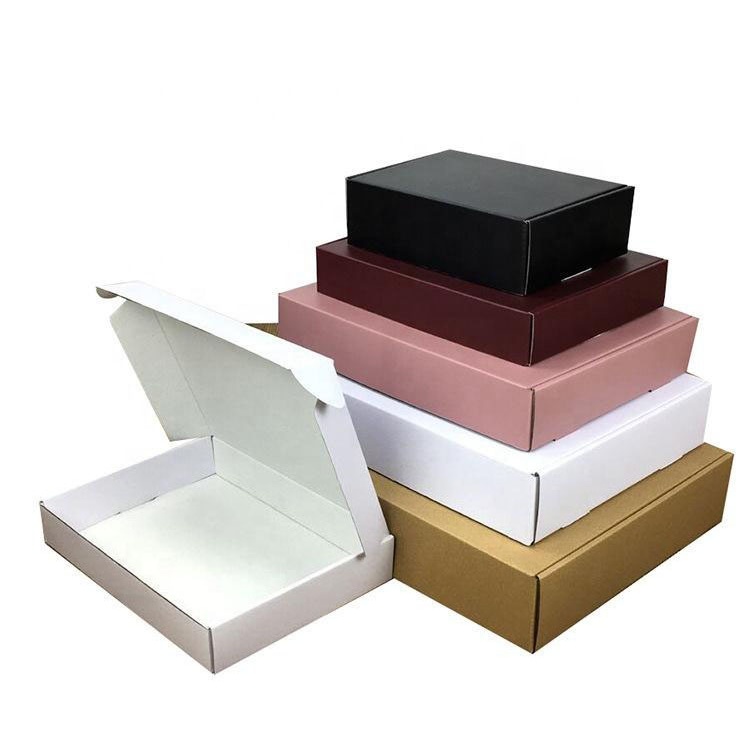
An edge crush test is a laboratory measurement of how much compressive force a short corrugated board specimen resists per unit of loaded edge length, commonly reported in pounds-force per inch or kilonewtons per meter, and used to specify the board’s edgewise strength.
In the ECT vs BCT comparison, BCT is the direct measure of an assembled mailer’s compression resistance under specified laboratory conditions, while ECT describes the corrugated board’s edgewise strength, making the two measurements complementary tools for material specification and finished-box validation.
32 ECT mailer boxes are boxes specified with corrugated board rated at 32 pounds-force per inch of edgewise compression strength, approximately 5.60 kilonewtons per meter, with actual product suitability depending on box dimensions, construction, cushioning, closure, handling conditions, and the required performance tests.
Testing mailer box strength is a documented process combining an edge crush test for the board, a box compression test for the assembled mailer, and distribution testing of the packed product, with conditioning, sampling, and acceptance criteria selected to reflect the intended shipping route.
Send XD Packaging your product dimensions, packed weight, fragility concerns, shipping destinations, storage conditions, and expected order quantity.
Request a custom mailer sample and specification review, and ask the quotation to identify the proposed board grade, ECT method, finished-box compression requirements, and any third-party testing arrangements.
Approve the structure, sample, and acceptance criteria together. That gives your next production order a measurable standard.