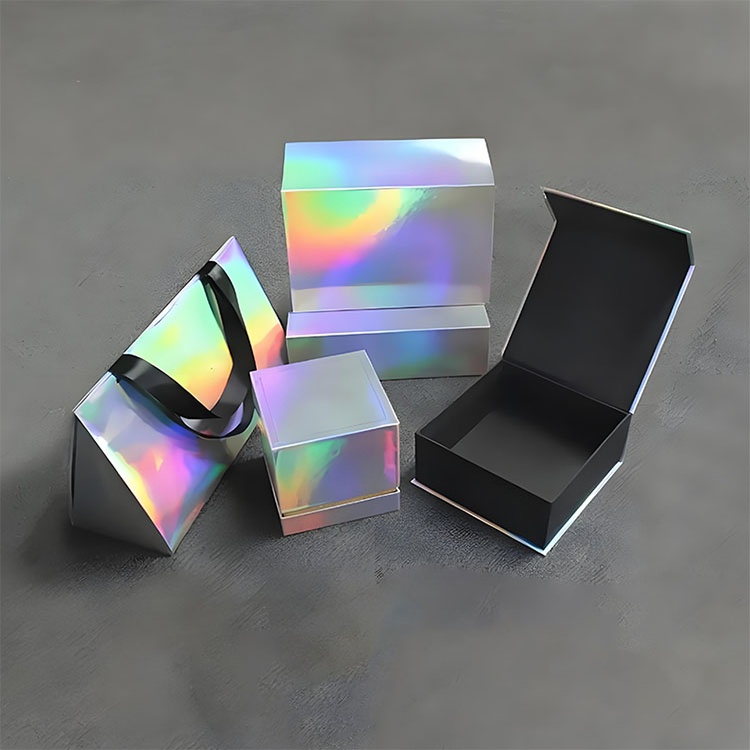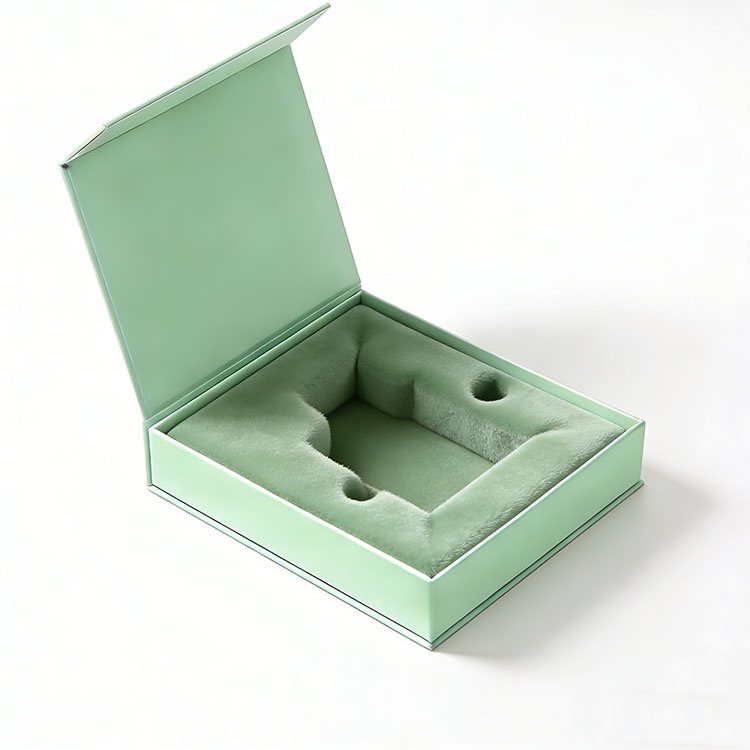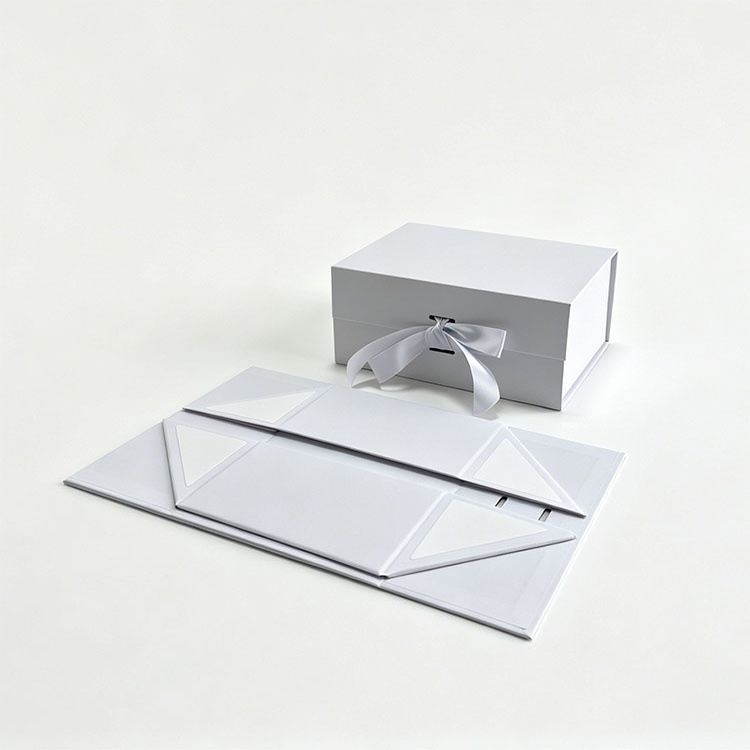




A metallic finish can hide an expensive production problem. Here’s how to evaluate the substrate, white ink, adhesive, corner construction, and finished samples before committing to a bulk order.
Shine proves nothing.
When I evaluate metallic paper for rigid boxes, I want to know how the complete wrap behaves after printing, gluing, corner forming, and packing, because a reflective sheet can disguise weaknesses that only become visible after conversion.
What good is a mirror finish if the corners split before the box reaches a customer?
My buying rule is straightforward: approve the material, printing, adhesive, and forming process together. A beautiful sheet is only the beginning of that decision.
“Metallic paper” describes an appearance. A useful production specification describes the construction underneath it.
In a rigid box, the greyboard provides the structure, while the metallic box wrapping paper provides the visible surface. The wrap still has to bend, bond, survive handling, and fit around corners without exposing its underlying layers.
Start by establishing what the supplier is actually offering.
| Construction | What creates the metallic appearance | Production question to resolve |
|---|---|---|
| Vacuum-metallized paper | A very thin deposited aluminum layer over a prepared paper surface | Which topcoat, ink system, and forming conditions are approved for this grade? |
| Aluminum foil laminated to paper | A separate foil layer bonded to paper | Will the laminate remain intact around the specified corners and turn-ins? |
| Metallized film laminated to paper | A metallized plastic film, such as PET, retained in the construction | Which surface receives the ink, and what surfaces meet at glued overlaps? |
These distinctions are established manufacturing differences: Nissha distinguishes metallized paper from aluminum foil and metallized PET film. Nissha Metallizing
When comparing metallic paper packaging options, ask for the exact grade, grammage in g/m², total caliper in µm, grain direction, reverse-side treatment, and layer construction.
Also ask whether any plastic carrier remains in the finished material. A temporary carrier used during transfer metallization and a retained film laminate create different finished structures.
I consider “same color, same weight” an incomplete substitution proposal. Require approval of the replacement grade before production.
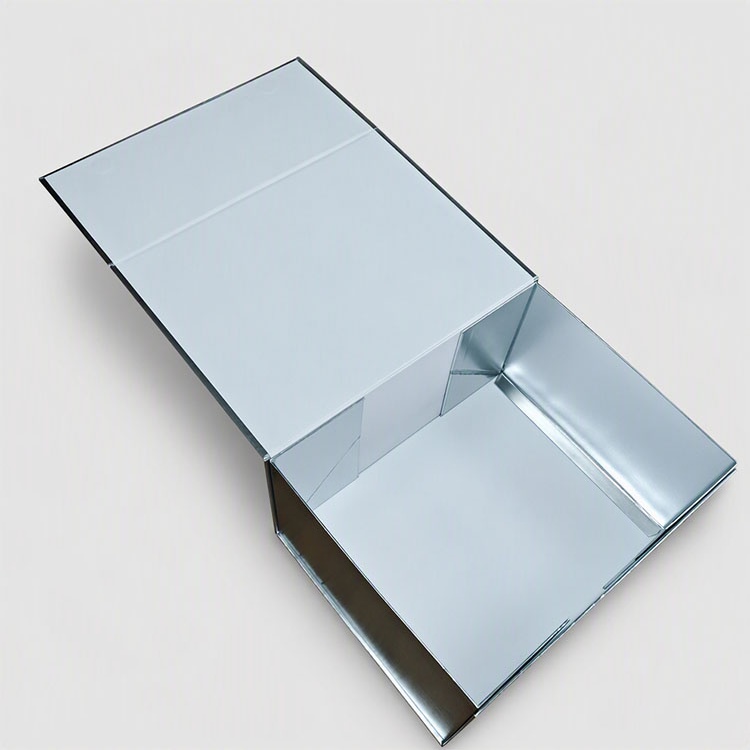
Printing on metallic paper involves controlling how much of the reflective substrate remains visible through the graphics.
Transparent process inks can produce colored metallic effects. An opaque white underprint reduces that influence where the design requires more conventional color reproduction, readable text, or clearer product photography.
That white layer deserves its own specification.
A University of Zagreb study published on January 25, 2026 compared one and two white base coats on metallized cardboard. Researchers used a Koenig & Bauer KBA RA 106 X-7 + L RS press and tested the prints on a Hanatek abrasion tester at 60 revolutions under a 1-pound load.
Two white base coats produced better color stability after rubbing. But the single-coat prints had higher gloss: 20.14–23.44 gloss units, compared with 9.58–11.17 for double-coat prints, measured at 60°.
There’s the tradeoff. Additional white changed both durability and appearance.
Those findings apply to the tested board, inks, and printing conditions. For a rigid-box wrap, I would compare candidate white-ink builds on the actual stock before selecting one.
A useful packaging artwork design brief should identify:
Agree on color measurement conditions and a physical reference sample. On reflective packaging, I also want visual approval from several viewing angles; one photograph cannot communicate the full surface effect.
The phrase “glue suitable for metallic paper” leaves too much unanswered.
The main wrapping operation may bond the paper’s reverse side to greyboard. At an overlap, that same reverse side may meet a printed, varnished, or laminated face. Those interfaces deserve separate trials.
My first question is simple: what exactly is touching the adhesive?
For a useful adhesive trial, record the product code, application weight, working time before contact, pressure, and ambient conditions. Then inspect the bond after the adhesive’s specified setting or curing period and after agreed storage exposures.
An immediate pull only tells you about early tack.
A destructive peel can reveal where failure occurred: between glue and paper, inside the coating, within the laminate, or through the paper fibers. That location matters. Changing the adhesive will have limited value if the coating itself separates from its base.
I would also investigate uneven adhesive application when panels curl or the reflective face develops visible distortion. The assembled box has to remain flat enough to preserve the intended finish.
A rigid-box wrap bends around board edges, turns into the box, and gathers at corners. Its forming conditions need to suit that geometry.
ACTEGA’s guidance on breaking at folds identifies grain direction and heavy ink or coating coverage as relevant factors. It recommends folding along the grain where possible and reducing excessive coverage at fold lines.
A box, however, has corners in more than one direction. Grain orientation alone cannot resolve the whole design.
I would approach corner cracking in three stages:
Bring these observations into the rigid box structural design review. A recurring split at one corner may require a geometry change.
For comparable laboratory results, ISO 187:2022 specifies a standard paper-testing atmosphere of 23 ± 1°C and 50 ± 2% relative humidity. Match factory settings to the material supplier’s guidance, and include expected shipping and storage climates in the trial plan.
The question “how to prevent metallic paper cracking during box production” becomes much easier to answer once the failure is tied to a particular material, location, and process stage.
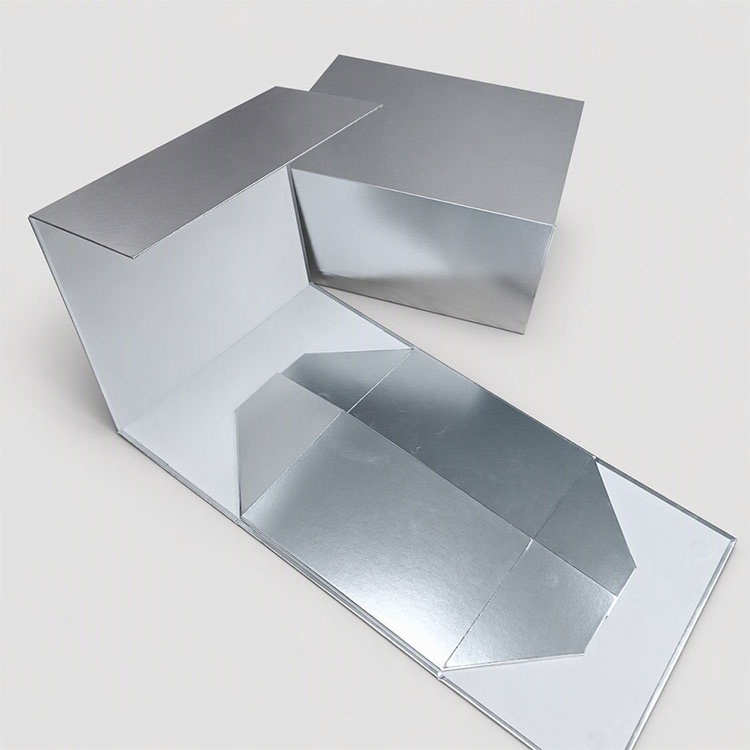
My unpopular opinion: a presentation sample is a weak purchasing document unless its production route is recorded.
When requesting Muster und Prototypen für kundenspezifische Verpackungen, specify which decisions the sample must validate. A structural mock-up can establish fit. A printed prototype can establish layout. A production-representative trial should establish how the selected materials behave together.
I would require approval records for:
Keep both an approved sample and agreed examples of unacceptable defects. “Minor scuffing” is a poor inspection instruction until everyone can recognize its limit.
Cost should reflect accepted output, too.
Illustrative calculation: at $2.00 per manufactured box und 8% rejection, manufacturing spend becomes $2.00 ÷ 0.92 = $2.17 per accepted box, before sorting, freight, or replacement work.
That is why I want white ink, protective finishing, tooling, setup, and trial costs itemized. An inexpensive sheet can become an expensive finished box.
Metallized paper for packaging comes with construction-specific recovery questions. The finished rigid box may also contain film, adhesive, magnets, foam, or fabric inserts.
Ask what the recycling evidence actually covers.
For U.S. marketing, the Federal Trade Commission’s Green Guides summary says recyclable claims should be qualified when suitable facilities are unavailable to at least 60% of consumers or communities where the product is sold. That threshold concerns access to appropriate facilities.
There is a documented commercial lesson here. On September 10, 2024, the SEC announced a $1.5 million settlement with Keurig Dr Pepper over inaccurate statements about K-Cup recyclability in its 2019 and 2020 annual reports. According to the SEC, the disclosures omitted significant concerns from two major recycling companies; Keurig settled without admitting or denying the findings.
That case concerned beverage pods and investor disclosures. The purchasing lesson I draw is narrower: keep evidence that supports the specific claim being made about the specific finished package.
Approve that wording before printing thousands of boxes.
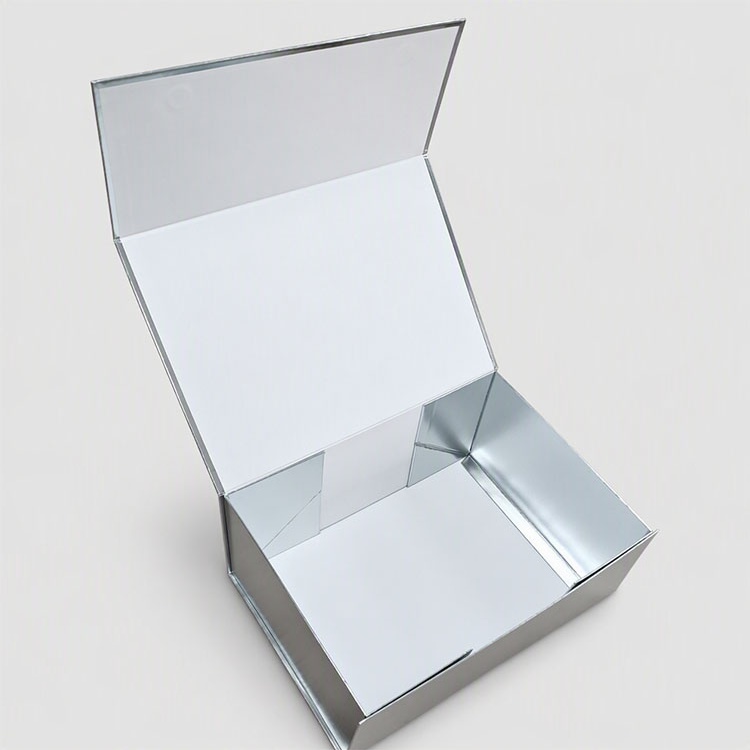
The best metallic paper for rigid boxes is a specified grade whose construction, caliper, grain direction, printable coating, and reverse surface work with the intended box geometry, ink system, adhesive, and production equipment while meeting the project’s agreed appearance, durability, cost, and recovery requirements.
Preventing metallic paper cracking during box production means controlling wrap flexibility, moisture condition, grain orientation, ink and coating build, corner geometry, and forming pressure together, then validating the combination on finished boxes produced with the specified materials and process under agreed handling and storage conditions.
White underprinting is an opaque base layer used beneath selected graphics on metallic paper to reduce the reflective substrate’s influence on color and improve legibility, while exposed areas or transparent inks retain metallic effects, so its use depends on the approved artwork and print performance.
An adhesive compatible with metallic paper is a formulation that bonds the actual reverse coating or paper backing to the board, and bonds any overlapping surfaces, with sufficient working time, set behavior, and aged strength for the specified production process and expected service conditions.
Send XD Packaging your box dimensions, target quantity, artwork, finish reference, and destination market through the metallic rigid box project inquiry form.
Request a substrate specification, printing and white-ink proposal, corner-forming trial, adhesive evaluation, and itemized quotation. Approve the finished sample and written acceptance criteria before releasing the bulk order.