




Deeper embossing does not automatically produce better packaging. Here is how to evaluate relief depth, paperboard, artwork geometry, and finished samples before approving production.
Depth is deceptive.
When a packaging specification asks for a 0.5 mm emboss without naming the board grade, artwork geometry, coating system, or measurement point, it leaves the converter to solve several different engineering problems behind one deceptively simple number.
Was genau genehmigen wir eigentlich?
I would challenge that specification before approving tooling. In paper embossing, the useful number is the relief that survives production and remains on the finished box. A deeper die does not establish that result.
There is no universal maximum embossing depth for paper boxes. There are material limits, geometry limits, and finishing limits—and they need to be evaluated together.
Three measurements can appear in the same conversation:
A quotation should identify which measurement it means.
Die Holmen Iggesund paperboard reference manual describes relief patterns from 0.15 to 2.5 mm high or deep, and 0.25 to 0.60 mm when embossing and hot foil stamping occur together. Those are published process ranges, not guaranteed specifications for every substrate, logo, or box construction.
That distinction matters. A capability range becomes useful only after the converter identifies the conditions under which it applies.
Für custom folding carton packaging, the formed board must also survive creasing, folding, and assembly. An attractive flat sheet is an intermediate result.
A 2022 BioResources study hosted by NC State University tested Stora Enso Performa Bright board at 320 g/m² und 551 ± 4 µm thick. For its truncated-pyramid geometry at a 200 µm embossing path, conventional embossing retained less than 25% of that movement as finished depth; more than 75% was lost through elastic recovery.
These results came from a specific laboratory configuration, including a flat counter tool. They are not a conversion formula for production embossing dies.
My takeaway is straightforward: a machine setting alone tells a buyer very little about the relief that will remain.
In LUT University’s 2019 research on embossed paperboard and polymer coatings, the demanding test pattern required local strains reaching 27%. The researchers reported that PET-coated samples maintained their tightness properties despite local stretching and thinning.
That finding belongs to the tested materials and conditions. It does not establish that every coated carton can tolerate the same deformation.
For barrier packaging, I would include barrier performance in the approval criteria. Appearance cannot answer that question.

Holmen’s KOSÉ INFINITY packaging case study, published on November 15, 2019, identifies Invercote G 330 g/m² for the Royal Flower Collection VII Compact Powder carton, which combined delicate exterior embossing with floral printing inside.
The case identifies the board and application. It does nicht publish an embossing depth.
That is a useful boundary. We can learn from the material choice without inventing a millimeter specification.
The first design limit may be a narrow letter stroke or a nearby crease.
Custom Formed Products’ embossing guidelines advise against embossed details 2 points wide or smaller and recommend keeping embossing 0.25 inch away from a score. Treat these as that converter’s practical guidelines, with the final limits confirmed for your project.
| Design variable | Published guideline or practical constraint | What to request before approval |
|---|---|---|
| Fine strokes | CFP advises against widths of 2 pt or less, approximately 0.71 mm | A proof showing the narrowest stroke and smallest internal gap |
| Distance from scores | CFP recommends 0.25 in, approximately 6.35 mm | An assembled sample showing the relief beside the actual fold |
| Kleine Schrift | Stroke width and open counters need individual review | Artwork at final size, with vulnerable details identified |
| Foil over relief | Foil coverage and registration add approval requirements | The intended foil and emboss combination on production stock |
| Wrapped rigid boxes | Core thickness alone cannot define the wrap’s embossing limit | A finished, glued box showing the retained relief |
Die 2-point measurement concerns feature width, not a universal minimum font size. Two typefaces at the same point size can have very different stroke widths.
I would simplify a fragile logo before asking the press operator for more pressure. A cracked serif is a failed detail, regardless of how deep the surrounding emboss feels.
Use a packaging artwork design review to check strokes, gaps, finishing layers, and registration before manufacturing the die.
GSM measures mass per unit area. It does not specify thickness, fiber structure, coating flexibility, or the ability to retain a formed shape.
Holmen’s reference manual identifies strength, elongation, toughness, moisture content, thickness, and density as relevant properties. It also explains that suitable solid bleached board can produce relief exceeding its own thickness—another reason to reject a universal “depth must equal board thickness” rule.
For blind embossing, compare the actual surface and fiber response. Include uncoated paper packaging options in the shortlist when their appearance fits the brief, but approve the named grade and finished sample.
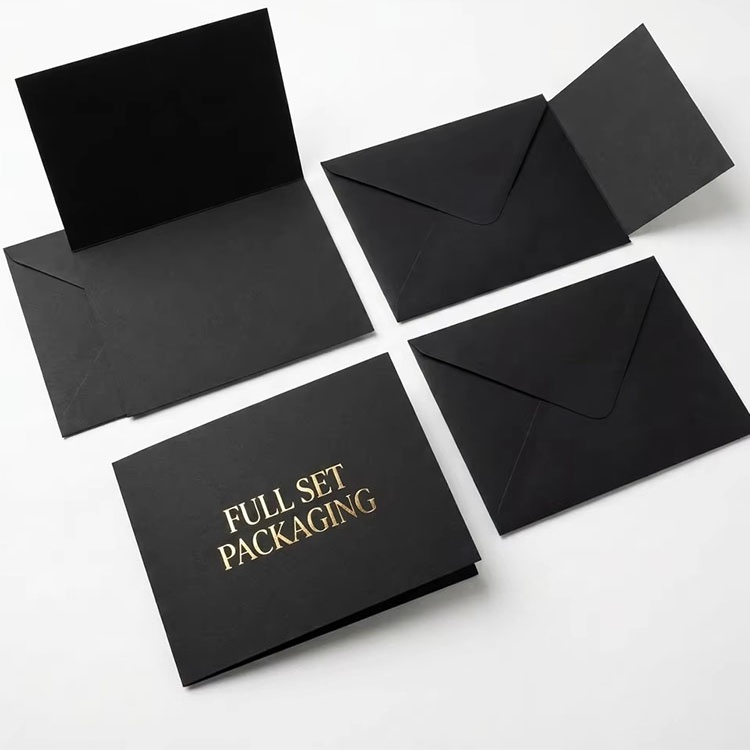
Ask where and when the relief is formed. Is the wrap embossed before mounting, or is an impression applied to the assembled structure?
Those routes create different constraints. A thick greyboard core does not, by itself, establish how deeply a thin decorative wrap can be embossed.
Bring the relief location into the structural design and engineering review, especially around lid edges, hinges, corners, and wrap turn-ins.
“Make it deeper” is a weak approval instruction.
I would request three clearly labeled relief options on the intended stock, using the intended finishing sequence. Let the converter propose feasible targets, then compare the completed boxes.
A useful approval brief should record:
For development, I would also request a repeat measurement after an agreed interval, such as 24 hours, to check whether the initial relief remains acceptable. That is a proposed project check, not a universal industry standard.
Verwendung Verpackungsmuster und Prototypenentwicklung to establish the physical reference. Confirm that the approval sample includes the intended embossing process; a digital mockup cannot establish material performance.
Then retain a signed master sample and its specification. Repeat orders need both.
The maximum embossing depth on a paper box is the greatest finished relief that its specific paper, artwork, tooling, and finishing sequence can retain without unacceptable damage, so a reliable limit must be established on production materials rather than inferred from a generic millimeter range.
Ask the converter to demonstrate the proposed depth on your actual construction.
The best paperboard for embossing is a grade that combines sufficient strength, formability, and permanent shape retention for the selected artwork, with solid bleached grades often suitable for demanding relief and folding boxboard also viable when the exact construction and surface finish are validated through sampling.
Specify the grade and caliper alongside GSM.
Blind embossing is a finishing process that creates a raised design in paper or paperboard without ink or foil on the embossed image, making the result depend on relief shape, edge definition, surface texture, and lighting instead of a printed or metallic outline.
Review the sample under both ordinary viewing conditions and side lighting.
Embossing depth should be measured as the height of the finished raised feature above the nearby unembossed surface after an agreed conditioning period, using a suitable low-force instrument or optical profile method and recording the measurement locations, material grade, and finishing state.
Agree the method before setting the production tolerance.
Send your dieline, vector artwork, proposed paper grade, caliper, box dimensions, order quantity, and finish requirements to XD Packaging for a paper box embossing review.
Request feasible relief options, an assembled approval sample, and separate tooling and sampling costs. Approve the depth your finished box can consistently retain.